
 Image 1 of 1
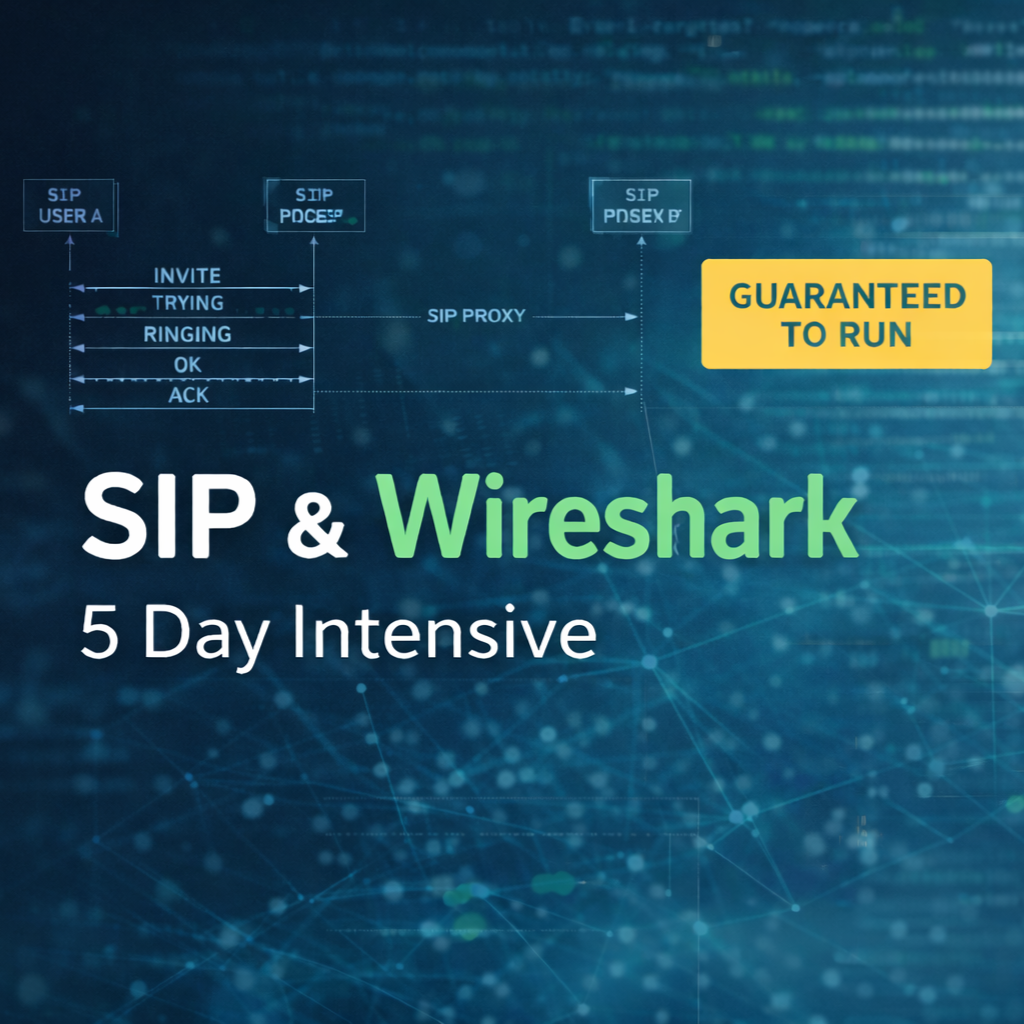
A comprehensive, hands-on introduction to the Session Initiation Protocol (SIP) and its role in modern voice, video, and real-time communications systems with Wireshark. Students learn how SIP works at the protocol level, including call setup, teardown, registration, signaling flows, and common headers, while gaining practical experience troubleshooting SIP traffic using real-world tools and packet analysis. The course covers SIP as defined in RFC 3261, infrastructure components, security considerations, NAT traversal, and how SIP integrates with VoIP platforms and enterprise networks, giving learners the skills needed to confidently deploy, analyze, and support SIP-based communications.
May 18-21, 2026
10:00 AM - 6:00 PM
Virtual: Online - US/Eastern
Introduction to VoIP and real-time communications
SIP history, standards, and core concepts
Understanding “State”
SIP roles and components (User Agents, Registrars, Proxies, Redirect Servers)
Lab: Exploring basic SIP messages and call setup
SIP request and response model
SIP URIs, addressing, and basic call flow
Overview of Wireshark and Packet Capture Tools
Lab: Decoding SIP with Wireshark
SIP methods (INVITE, ACK, BYE, REGISTER, OPTIONS, CANCEL)
SIP response codes and transaction states
Dialogs, transactions, and sessions
Common call flow scenarios (inbound, outbound, transfers)
Lab: Capturing and analyzing SIP call flows with Wireshark and TCPDump
Uncommon call flow scenarios (third party call control)
SIP vs RTP: signaling vs media
SDP fundamentals and media negotiation
Codecs, ports, and media streams
NAT challenges and SIP traversal techniques
STUN, TURN, and ICE overview
Lab: Analyzing SIP + RTP traffic and diagnosing one-way audio issues
SIP trunks and carrier interconnects
Session Border Controllers (SBCs)
SIP in enterprise environments (PBXs, SBCs, softphones)
Authentication, encryption, and TLS
Common SIP attacks and misconfigurations
Best practices for secure SIP deployments
Lab: Identifying security issues and misconfigurations in SIP traffic
Systematic SIP troubleshooting methodology
Common failure scenarios (registration failures, call drops, audio issues)
Reading SIP logs and packet captures efficiently
Performance considerations and optimization
End-to-end troubleshooting case studies
Lab: SIP troubleshooting challenge using real-world scenarios
A comprehensive, hands-on introduction to the Session Initiation Protocol (SIP) and its role in modern voice, video, and real-time communications systems with Wireshark. Students learn how SIP works at the protocol level, including call setup, teardown, registration, signaling flows, and common headers, while gaining practical experience troubleshooting SIP traffic using real-world tools and packet analysis. The course covers SIP as defined in RFC 3261, infrastructure components, security considerations, NAT traversal, and how SIP integrates with VoIP platforms and enterprise networks, giving learners the skills needed to confidently deploy, analyze, and support SIP-based communications.
May 18-21, 2026
10:00 AM - 6:00 PM
Virtual: Online - US/Eastern
Introduction to VoIP and real-time communications
SIP history, standards, and core concepts
Understanding “State”
SIP roles and components (User Agents, Registrars, Proxies, Redirect Servers)
Lab: Exploring basic SIP messages and call setup
SIP request and response model
SIP URIs, addressing, and basic call flow
Overview of Wireshark and Packet Capture Tools
Lab: Decoding SIP with Wireshark
SIP methods (INVITE, ACK, BYE, REGISTER, OPTIONS, CANCEL)
SIP response codes and transaction states
Dialogs, transactions, and sessions
Common call flow scenarios (inbound, outbound, transfers)
Lab: Capturing and analyzing SIP call flows with Wireshark and TCPDump
Uncommon call flow scenarios (third party call control)
SIP vs RTP: signaling vs media
SDP fundamentals and media negotiation
Codecs, ports, and media streams
NAT challenges and SIP traversal techniques
STUN, TURN, and ICE overview
Lab: Analyzing SIP + RTP traffic and diagnosing one-way audio issues
SIP trunks and carrier interconnects
Session Border Controllers (SBCs)
SIP in enterprise environments (PBXs, SBCs, softphones)
Authentication, encryption, and TLS
Common SIP attacks and misconfigurations
Best practices for secure SIP deployments
Lab: Identifying security issues and misconfigurations in SIP traffic
Systematic SIP troubleshooting methodology
Common failure scenarios (registration failures, call drops, audio issues)
Reading SIP logs and packet captures efficiently
Performance considerations and optimization
End-to-end troubleshooting case studies
Lab: SIP troubleshooting challenge using real-world scenarios