
 Image 1 of 1
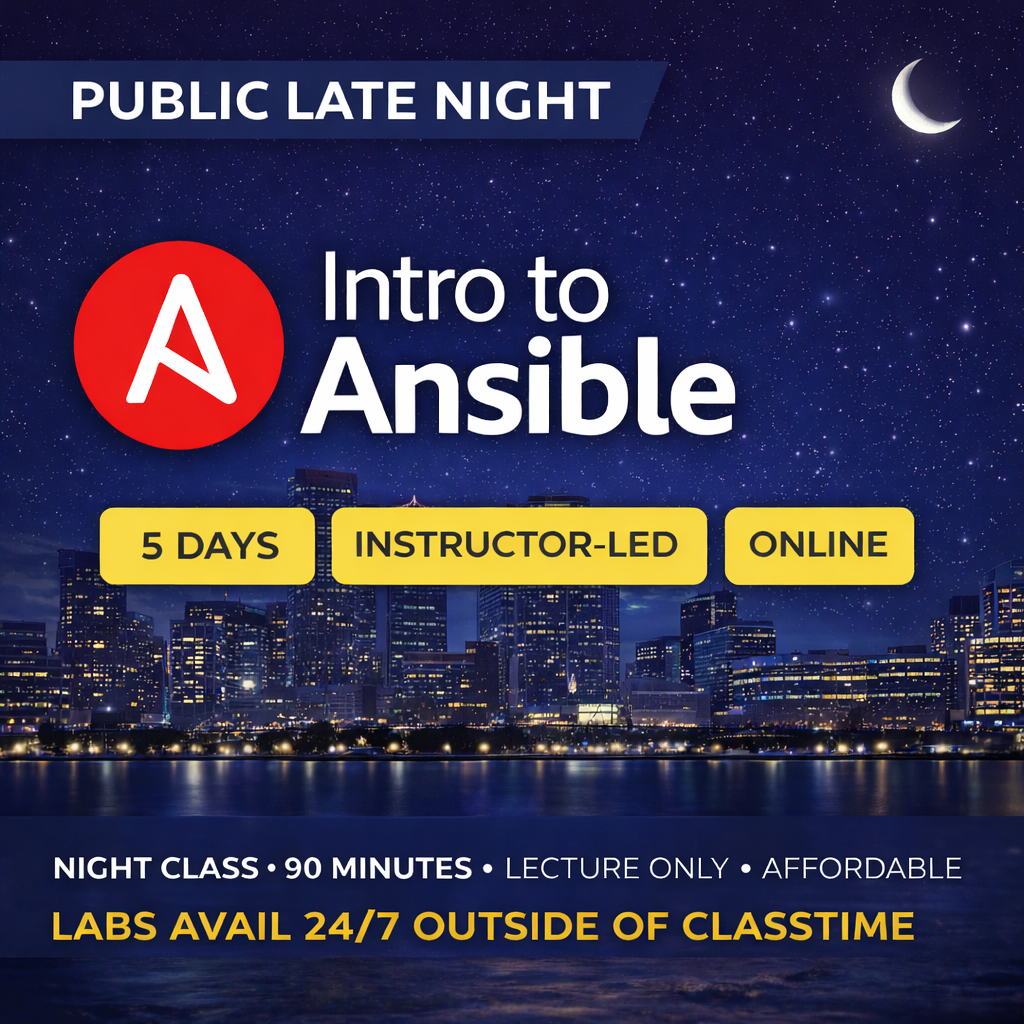
This is a public course open to anyone that wants or needs to learn Ansible outside of working hours. This instructor led class runs for 90 minutes beginning at 9pm Eastern / 6pm Pacific. Class time is limited to lecture and demos. Labs are to be completed outside of class.
A practical, hands-on introduction to automating IT infrastructure using one of the industry’s most widely adopted automation frameworks, Ansible. Students learn how to build, read, and manage Ansible playbooks to automate configuration, deployment, and orchestration across servers, network devices, and cloud environments. The class covers core concepts such as inventories, modules, variables, roles, and automation best practices, while emphasizing real-world use cases that help teams reduce manual effort, improve consistency, and scale operations with confidence.
Location: On-Line
Guaranteed to Run Dates:
(2026) January 05 to January 09
(2026) February 02 to February 06
(2026) March 02 to March 06
Start Time: 9:00 pm Eastern / 6:05 pm Pacific
End Time: 10:35 pm Eastern / 7:35 pm Pacific
Labs: PDF & Videos - To be completed outside of class
Course Includes Certificate of Completion
Introduction to automation and Ansible use cases
Ansible architecture and components
Control nodes, managed nodes, and inventories
YAML basics for Ansible
Running Playbooks
Lab: Installing Ansible, configuring inventory, and running first playbooks
Modules, tasks, and idempotency
Variables, facts, and precedence
Structuring playbooks for readability and reuse
Making API calls with playbooks
Lab: Parameterized playbooks and making API calls
Managing packages, services, files, and users
Error handling and debugging techniques
Tags, loops, and advanced task control
Introduction to automating network or cloud resources
Lab: Automating multi-host system configuration and deployments
Handlers and conditional logic
Playbook testing and linting concepts
Real-world automation patterns and case studies
Roles and directory structure best practices
Building a collection
Lab: Creating roles and collections
Templates with Jinja2
Ansible Vault and secret management
Writing maintainable and scalable automation
Integrating Ansible into CI/CD pipelines
Lab: Securing variables with ansible vault
This is a public course open to anyone that wants or needs to learn Ansible outside of working hours. This instructor led class runs for 90 minutes beginning at 9pm Eastern / 6pm Pacific. Class time is limited to lecture and demos. Labs are to be completed outside of class.
A practical, hands-on introduction to automating IT infrastructure using one of the industry’s most widely adopted automation frameworks, Ansible. Students learn how to build, read, and manage Ansible playbooks to automate configuration, deployment, and orchestration across servers, network devices, and cloud environments. The class covers core concepts such as inventories, modules, variables, roles, and automation best practices, while emphasizing real-world use cases that help teams reduce manual effort, improve consistency, and scale operations with confidence.
Location: On-Line
Guaranteed to Run Dates:
(2026) January 05 to January 09
(2026) February 02 to February 06
(2026) March 02 to March 06
Start Time: 9:00 pm Eastern / 6:05 pm Pacific
End Time: 10:35 pm Eastern / 7:35 pm Pacific
Labs: PDF & Videos - To be completed outside of class
Course Includes Certificate of Completion
Introduction to automation and Ansible use cases
Ansible architecture and components
Control nodes, managed nodes, and inventories
YAML basics for Ansible
Running Playbooks
Lab: Installing Ansible, configuring inventory, and running first playbooks
Modules, tasks, and idempotency
Variables, facts, and precedence
Structuring playbooks for readability and reuse
Making API calls with playbooks
Lab: Parameterized playbooks and making API calls
Managing packages, services, files, and users
Error handling and debugging techniques
Tags, loops, and advanced task control
Introduction to automating network or cloud resources
Lab: Automating multi-host system configuration and deployments
Handlers and conditional logic
Playbook testing and linting concepts
Real-world automation patterns and case studies
Roles and directory structure best practices
Building a collection
Lab: Creating roles and collections
Templates with Jinja2
Ansible Vault and secret management
Writing maintainable and scalable automation
Integrating Ansible into CI/CD pipelines
Lab: Securing variables with ansible vault